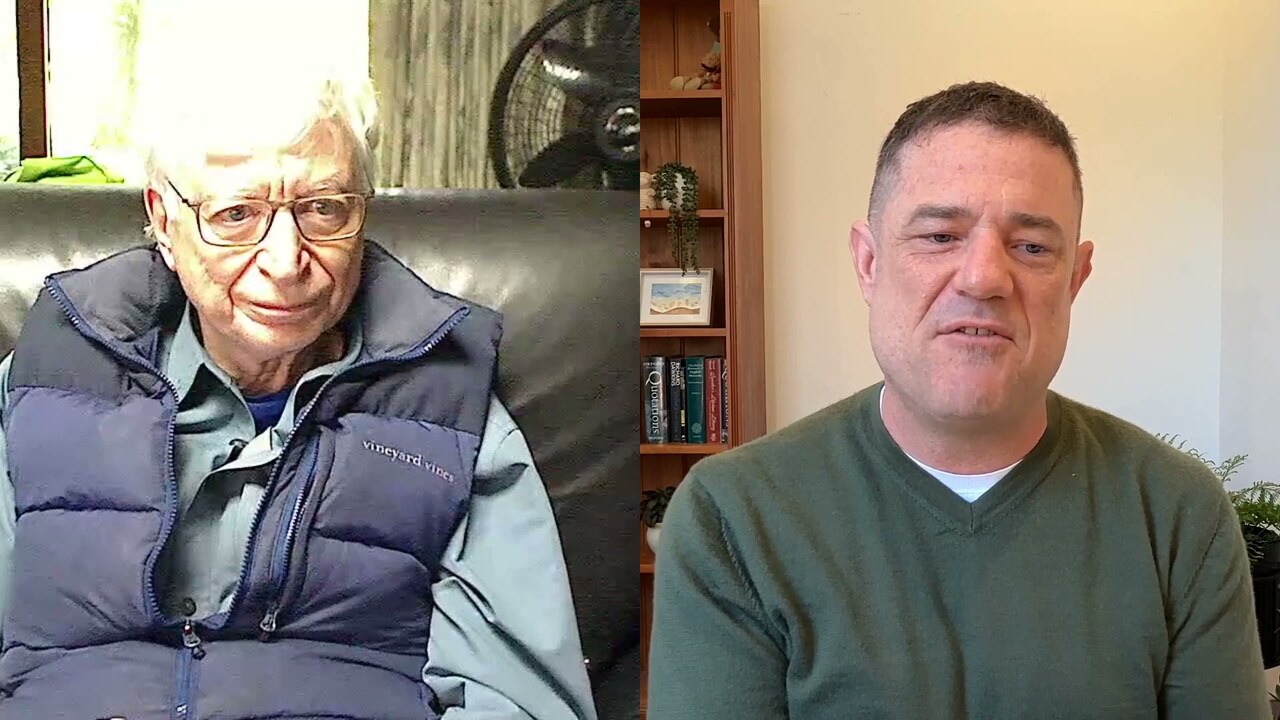
If you have ever had a vitamin D blood test, you have read Michael Holick's work. He identified 25-hydroxyvitamin D, the metabolite your lab measures, and he isolated 1,25-dihydroxyvitamin D3, the active hormone. He did both as a graduate student, before he had his doctorate. That was 55 years ago. Somewhere north of 600 publications later, he sat down with me for 80 minutes and answered questions from a patient community he had never met.
Why I wanted this interview
I am not a doctor. I am an episodic cluster headache patient. Eleven years ago a retired Navy fighter pilot called Pete Batcheller, a chronic cluster headache sufferer himself, now 84 and spending most of his time fishing in the Gulf of Alaska, introduced me to a vitamin D regimen that had come out of our own patient community. Not a clinic. Not a trial. A community of people in extraordinary pain, comparing blood tests and keeping notes.
It worked for me. It has kept working for eleven years. And the whole time there has been a question sitting underneath it that I could never answer on my own: is the science actually there, or have we built something on hope?
So I went to the source. My goal in doing this, and I said so to him in the first minute, is to find one of the roughly 600 cluster headache researchers in the world who is interested enough to pick up a proper vitamin D and cluster headache study. Everything else is a means to that end.
The number I did not expect
Late in the conversation I described the shape of the regimen our community uses: a target blood level of 80 to 100 ng/mL, held with a set of cofactors, and I said I have personally held that range for eleven years. I asked him what I should be wary of.
He checked I meant nanograms per millilitre and not nanomoles per litre. I confirmed it: 200 to 250 nmol/L in the units we use in New Zealand. Then he said this:
“Mine's around 82, because I take about 6,000 to 7,000 units a day.” Later, signing off, he rounded it: “I'm at 80 nanograms per ml. And at 80 years of age I think I'm doing okay.”
I want to be careful about what that does and does not mean, because it would be very easy to overclaim here.
It is not an endorsement of the cluster headache regimen. I told him I was not asking him to endorse it, only to talk about its shape, and he did not endorse it. The 2011 Endocrine Society guideline, from the committee he chaired, put the preferred range at 40 to 60 ng/mL, and he said so himself in this conversation. He also drew a clear line above 100: past that, he said, you begin to see more hypercalciuria, which can raise kidney stone risk in the people already prone to it.
But it does do something. The man with the deepest personal stake in getting vitamin D safety right, 55 years of it with his own name on the assay, has chosen for himself, at 80 years old, a blood level that sits inside the range our patient community aims for. He described 80 to 100 as “perfectly fine.”
That is not permission. It is context. And after eleven years of being told, gently and less gently, that the range I hold is reckless, context is worth a great deal.
The boundary, stated plainly: nothing here is medical advice, and nothing here is a protocol. The doses discussed in this conversation are well above standard guidance. Vitamin D interacts with calcium metabolism and with several medications. Talk to your own doctor, and get your level tested rather than guessing. Both Professor Holick and I said exactly that, more than once.
Act one: what 10,000 IU does that 3,000 IU does not
The paper I most wanted to talk about is his dose-response trial: 30 adults, randomised to 600, 4,000 or 10,000 IU a day for six months, measuring gene expression in white blood cells alongside calcium and parathyroid hormone. In plain English, here is what it found.
| Daily dose | Genes up- or down-regulated |
|---|---|
| 600 IU | around 150 |
| 4,000 IU | 320 |
| 10,000 IU | 1,289, across more than 80 metabolic pathways |
Ten thousand units changed roughly four times as many genes as four thousand. And through all of it, parathyroid hormone came down and plateaued, and serum calcium did not move.
The implication is the part that matters, and I put it to him to check I had understood: a person can reach a “sufficient” blood level and still be getting a fraction of the biological effect. He said that was precisely the question the study was built to ask.
His framing of why is elegant. Vitamin D's job in evolution was to hold your blood calcium in a normal range, because blood calcium governs neuromuscular function, cardiac function and most of your metabolism. Once that job is done, once calcium is handled, the body starts using vitamin D for everything else. The genomic work only shows up above the level that satisfies calcium.
He also corrected a thing almost everyone believes: vitamin D does not build bone. It stimulates osteoclasts to pull calcium out of bone to defend the blood level. What it does for bone is keep calcium and phosphate supersaturated in the blood so that new collagen matrix mineralises properly when it is laid down.
Why two people on the same dose end up in different places
This was the answer I came away thinking about most. When they looked at the individual gene expression maps at 10,000 IU a day, about 60% of people lit up like a Christmas tree. The other 40% showed the same genes moving in the same directions, but far weaker. Less increase in what should have increased, less suppression of what should have been suppressed. Same dose. Same blood level. Different biology.
I asked the loaded question: would more vitamin D get the weak responders there?
His view is no. He thinks the limit is downstream of the blood level: in vitamin D receptor polymorphisms, and in everything that has to go right after the receptor. He walked me through it: the VDR binds 1,25-dihydroxyvitamin D, then dimerises with the retinoid X receptor, then sits on a vitamin D response element on the DNA, and even then nothing happens until a whole cast of transcription factors arrives. A mutation in any one of those could blunt the response without touching the receptor itself. On top of that, some cells may simply destroy 1,25 faster than it can reach the nucleus.
He wanted to extend the work and could not get funding for it. That sentence came up more than once in 80 minutes.
“It's just not a polymorphism of the VDR. It's not just being able to sit on a segment of the DNA. There are lots and lots of possibilities that need to be worked out.”
Michael HolickLoading doses, and how long a new dose really takes
Useful, concrete numbers here. Every 100 IU raises your blood level by roughly 0.6 to 1 ng/mL, and the curve flattens as you go up because of negative feedback. A new dose takes about four to eight weeks to reach its new plateau.
On loading doses, which our community uses because a person finding the regimen is usually in the middle of an attack cycle and does not have six months to wait, he was mild rather than opposed. His view: loading is fine, it probably does not make much difference, and what actually matters is holding the level steady by taking it daily.
I also asked whether a loading phase followed by a maintained 80 to 100 ng/mL changes the calcium picture. His answer was no, with one important caveat he raised himself: granulomatous disease. In sarcoidosis or tuberculosis, macrophages activate vitamin D so aggressively that the active form escapes into the circulation and can genuinely cause toxicity. That is the real contraindication, and it is a specific one.
Act two: the receptor, and why “it's just about calcium” is decades out of date
The kidney makes the 1,25 that circulates in your blood, and that pool exists to manage calcium. But once your 25(OH)D is high enough, your macrophages, colon cells, skin cells and breast cells start activating vitamin D locally, for their own use. The active hormone made in those tissues never enters the bloodstream. The cell induces an enzyme, 24-hydroxylase, to destroy it on site, because if that locally made 1,25 got back into circulation it would cause toxicity.
That is the whole ballgame for anyone wondering why blood level matters rather than just dose. Local production requires substrate. Substrate is your 25(OH)D.
There was a story here I had not heard. A startup in Utah built an assay for endothelial membrane stability and screened around 10,000 compounds hoping to find a drug. The most effective compound they found was vitamin D itself: not 25(OH)D, not the active hormone, but plain vitamin D, by a margin he put at ten thousand times. Bruce Hollis had told me years ago that vitamin D is “a potent stabiliser of the endothelium,” and I am not sure I understood what he meant until this conversation.
Holick then tied it to something from his own bench work. When your skin makes previtamin D, the reason it converts to vitamin D within hours instead of days is that its precursor sits flat in the plasma membrane, which forces the reaction down the fast path. He worked that out in lizard skin first, then confirmed it in human skin. His reading of it: vitamin D is a membrane molecule as much as it is a hormone precursor.
The gut, the barrier and the microbiome
This is the part I care about most, because it is where I think the cluster headache answer may eventually live. The migraine literature has moved fast on altered gut bacteria, a leaky barrier, and animal work showing dysbiosis driving migraine-like pain through TNF-alpha in the trigeminal system. In cluster headache there has been no microbiome and vitamin D work at all. None.
His 2020 randomised dose-response study looked at what vitamin D does to gut flora in healthy adults. Bacteroides and Parabacteroides rose with dose. He believes the microbiome effect is dose-responsive in the same way the gene expression is, though the two studies were never formally linked. He was straight about Akkermansia muciniphila too. We know there is a relationship with better gut health, and the mechanism is still being worked out. No overclaiming.
The connection he drew is worth holding onto: all of those genes in the dose-response study were measured in white blood cells. Immune cells. And immune function is central to both the gut microbiome and the health of the intestinal lining. The two papers are looking at the same system from different ends.
On tight junctions and the gliadin work, he was candid that this is a frontier he wanted to research for years and could never fund. His instinct is that vitamin D matters for membrane function directly, alongside whatever the active form is doing at the nucleus.
“We were wearing blinders”
People treat vitamin D and the gut as a new field. It is not. Walter Stumpf's autoradiography put 1,25 in the nucleus of colon cells in the late 1970s, and the colon has almost nothing to do with calcium absorption. It was Dr Stasha Gominak who first pointed me at Stumpf's work.
Holick's account of that period is disarmingly honest. The field had decided the vitamin D receptor lived in bone, kidney and gut, because those are where calcium is regulated, and published that it was not found anywhere else. Stumpf showed otherwise. Within a few years they were finding the receptor in colon and prostate cancer cells, and then in essentially every cell in the body.
Then he asked Mother Nature a good question. Your epidermis has a vitamin D receptor, but your epidermis makes vitamin D, and skin has nothing to do with calcium metabolism. So why is the receptor there? He grew epidermal cells, added active vitamin D, and found it to be one of the most potent inhibitors of cell growth and inducers of differentiation he had seen. He put his MD hat back on, thought of psoriasis, melted some Vaseline, got FDA approval, and in 1987 demonstrated that topical active vitamin D treats it. It is still first-line for mild psoriasis today.
That is the whole method in one story: notice the anomaly, ask why it is there, then test it on a person.
Where the safety line actually is
This is the section I most wanted for our community, because vitamin D is almost always the first thing someone feels obliged to issue a public warning about, while considerably heavier drugs pass without comment.
Kidney stones. The honest answer is more specific than the warning. The dominant cause of stones is hyperabsorption of oxalate from the diet: dark green leafy vegetables and the like. Counterintuitively, a higher calcium intake within physiological range lowers your stone risk, not raises it. Raising 25(OH)D does increase calcium absorption and therefore urinary calcium, but he put the level where that becomes a concern at above 100 ng/mL. His practical advice: get a 24-hour urine calcium, and measure creatinine alongside it, because complete 24-hour collections are hard to get right, so it is the calcium-to-creatinine ratio you want. He said he is comfortable even at 35. Where he does draw a line is supplemental calcium: 1,000 mg elemental is fine, 1,500 to 2,000 mg is pouring calcium into the filtrate.
The 1950s scare. In post-war Britain, vitamin D was treated as a miracle and put into everything: milk, custard, soap, shaving cream. Then infants started presenting with unusual facial features, elevated calcium, supravalvular aortic stenosis and developmental delay. There was public alarm, experts were convened, and they found 1930s rat work showing similar effects from high-dose vitamin D in pregnancy. With no assay available to measure what was actually in the milk, the recommendation was simple: ban it. And if you are banning it in milk, ban it in everything. That legislation spread across much of the world.
It was Williams syndrome, a genetic disorder. Not vitamin D. But every generation of clinicians since has been taught that vitamin D is dangerously toxic in infants, and the ban is still in force in Great Britain.
Rat poison. We have a possum problem in New Zealand and the bait blocks contain cholecalciferol, so this one comes up. His explanation: when the asteroid hit 66 million years ago, the rat was among the vertebrates that came through, and it did so partly because it lives in the dark and does not need vitamin D. It is also exquisitely sensitive to it. Give a rat vitamin D and it develops soft tissue calcification and dies. That is a fact about rats. It says nothing about a person on 5,000 IU.
What actual toxicity looks like. Elevated calcium, elevated phosphate, suppressed PTH. You have to be taking hundreds of thousands of units daily, for a long time, with adequate calcium intake. He called it one of the rarest medical conditions reported in the world.
He has the case to prove it. In the 1990s a lawyer in Florida rang him threatening to sue, having followed his advice to take 2,000 IU a day. Holick's lab was one of the few in the world that could measure it, so he asked the man to send the product up. The manufacturer had forgotten to dilute it. He had been taking two teaspoons of pure crystalline vitamin D a day, roughly a million units daily, for more than a year. Holick declined to treat him with glucocorticoids and instead told him to wear sunscreen and a hat, stop the vitamin D and cut calcium from his diet. They published him in the New England Journal of Medicine. A year later his level was still 300 ng/mL. He had no complications.
There is also the Canadian family that turned up severely intoxicated with no dietary explanation, until a health official stirring his tea noticed two kinds of crystal in the sugar bowl. Their teenage son had bought rat poison and put it there because they had stopped him seeing his girlfriend.
“Vitamin D intoxication is one of the rarest medical conditions. You have to ingest hundreds of thousands of units of vitamin D daily.”
Michael HolickNone of that is a licence to be casual. He raised the granulomatous exception himself, he drew his own line above 100 ng/mL, and his own answer to what a person should do was: get your blood level measured. But the gap between how vitamin D is spoken about and what the toxicity literature actually contains is wide, and after this conversation I understand exactly where the gap came from.
Where he disagreed with us
I did not go into this to have my regimen validated, and it was not. Two answers cut against things our community treats as settled.
K2. David Nixon asked the question directly: is the mechanism real, K2 directing calcium away from arteries and into bone, and does the evidence support taking it alongside D3? Holick's answer was no. He explained where the belief comes from: Dutch and Japanese dietary studies where higher vitamin K intake tracked with fewer fractures and less cardiovascular disease, plus the fact that vitamin K gamma-carboxylates osteocalcin, which vitamin D stimulates. The inference looks tidy. But Sarah Booth, the world's leading vitamin K researcher and his co-author on the forthcoming third edition of Nutrition and Bone Health, reached the same conclusion he did: the data are not strong enough. He also said flatly that the internet claim that K2 helps vitamin D work in the gut is not true. His summary was blunt: want vitamin K, buy meat. And he noted that a lot of money has been made selling the combination.
I am reporting that as he said it. It is a real disagreement with part of our stack, and pretending otherwise would defeat the point of having asked.
Hunter-gatherer levels. He cited work on Maasai herders and Hadza hunter-gatherers showing blood levels of 40 to 60 ng/mL, which would take 4,000 to 6,000 IU a day to reach. He treats that as a real insight into what we should be aiming for. It is worth noticing that it sits below the range our community targets, not at it.
The Coimbra protocol. On Renu Mitani's psoriasis work and the high-dose Coimbra approach, he had one non-negotiable: at those doses you must be on a zero-calcium diet, absolutely and positively. He also does not think PTH is a good surrogate for whether vitamin D is doing its job, because PTH can be suppressed at 100 ng/mL and at 250 ng/mL alike. Suppression tells you nothing about whether you have reached the level that produces the effect you want. He has published a case of his own here: a young man with early-onset multiple sclerosis put on 1,000 IU per kilogram of body weight, still free of MS five years on.
The work he most wants remembered is not the vitamin D
I asked him, near the end, what he wants people to remember about his life's work. I expected vitamin D. He quoted Mark Twain, that the two most important days of your life are the day you were born and the day you found out why, and then went somewhere else entirely.
He has helped reunite more than a hundred families falsely accused of child abuse. He published 72 such cases and found 93% of them had a genetic disorder, Ehlers-Danlos syndrome, and 7% had classic vitamin D deficiency. Fractures that looked like abuse were fragile bones and fragile connective tissue.
He now believes EDS is a major worldwide health problem, present in at least 3% of the population and largely unrecognised: the light-headedness on standing, the gastroparesis, the global aches with a normal rheumatoid factor and normal ESR, the dysautonomia. Machine learning on his case series has him confident that the pathways are far more complex than a single mutation, and that a stress trigger can turn a healthy person into what he called a basket case within a month or two. He had interviewed a family an hour before we spoke: an 18-year-old who wanted to be a competitive swimmer and can no longer function.
The diagnosis is still clinical: a careful history, a Beighton score for joint hypermobility, piezogenic papules on the sides of the feet, a high dental palate, marfanoid arm span, doughy hyperelastic skin, listening for a click murmur, checking for absent frenula. His group is now reporting 88% accuracy from facial recognition alone.
For a cluster headache patient this lands hard. A severe, disabling, poorly recognised condition, where the patient is disbelieved and the specialists will not read the literature. We know that story from the inside.
The marathon
He is 80. He has stage 3 prostate cancer with a Gleason score of 9. In his words, this type of cancer eats you alive. As an endocrinologist of more than 40 years he knew exactly what androgen deprivation therapy was going to do to him: sarcopenia, muscle loss, listlessness.
So before the therapy started, he began walking five to eight miles a day and fixed his diet. The following year he decided to step it up. He had never run in his life. He decided he would run the Boston Marathon. He started at an eighth of a mile, then a quarter. Six months later he could run 25.
He ran Boston in 2024 with zero testosterone, anaemic, and dealing with hot flashes. It made the Boston Globe, and he says his neighbours started stopping him in the street to tell him they had got their treadmills fixed.
Asked what alongside vitamin D makes for good health, his answer was exercise, protein and common sense, plus a warning that if your diet is bad and you are a couch potato, all the vitamin D in the world will not save you. He is not a panacea salesman. He was clear-eyed about how much is still unknown, including whether vitamin D's effect in a condition like mine is disease-modifying or suppressive. His honest answer to that was: probably both, and we do not know how to tell them apart yet.
Eleven years later
In 2015, the one and only neurologist I ever saw told me: Craig, I can't tell you how much to take, but I've heard vitamin D can be helpful for cluster headache.
Eleven years later I was interviewing the man who identified both of the molecules that sentence depends on. I am now working to form a trust in New Zealand so this information reaches patients properly, and so that every Kiwi with cluster headache can get oxygen for acute treatment. You can read about that here.
His closing answer, to the cluster headache patient watching and wondering whether to raise this with their doctor, was that unless you have a reason not to take it, you should be on an adequate amount and you should get your blood level measured. Then he told us where his own sits.
Chapters
Professor Holick's Ehlers-Danlos work and his published papers are at drmichaelholick.org. My thanks to him for 80 generous minutes, and to Pete Batcheller, who started all of this.
Watch the full conversation on Inspired Conversations.
Watch the full interview