


Introduction
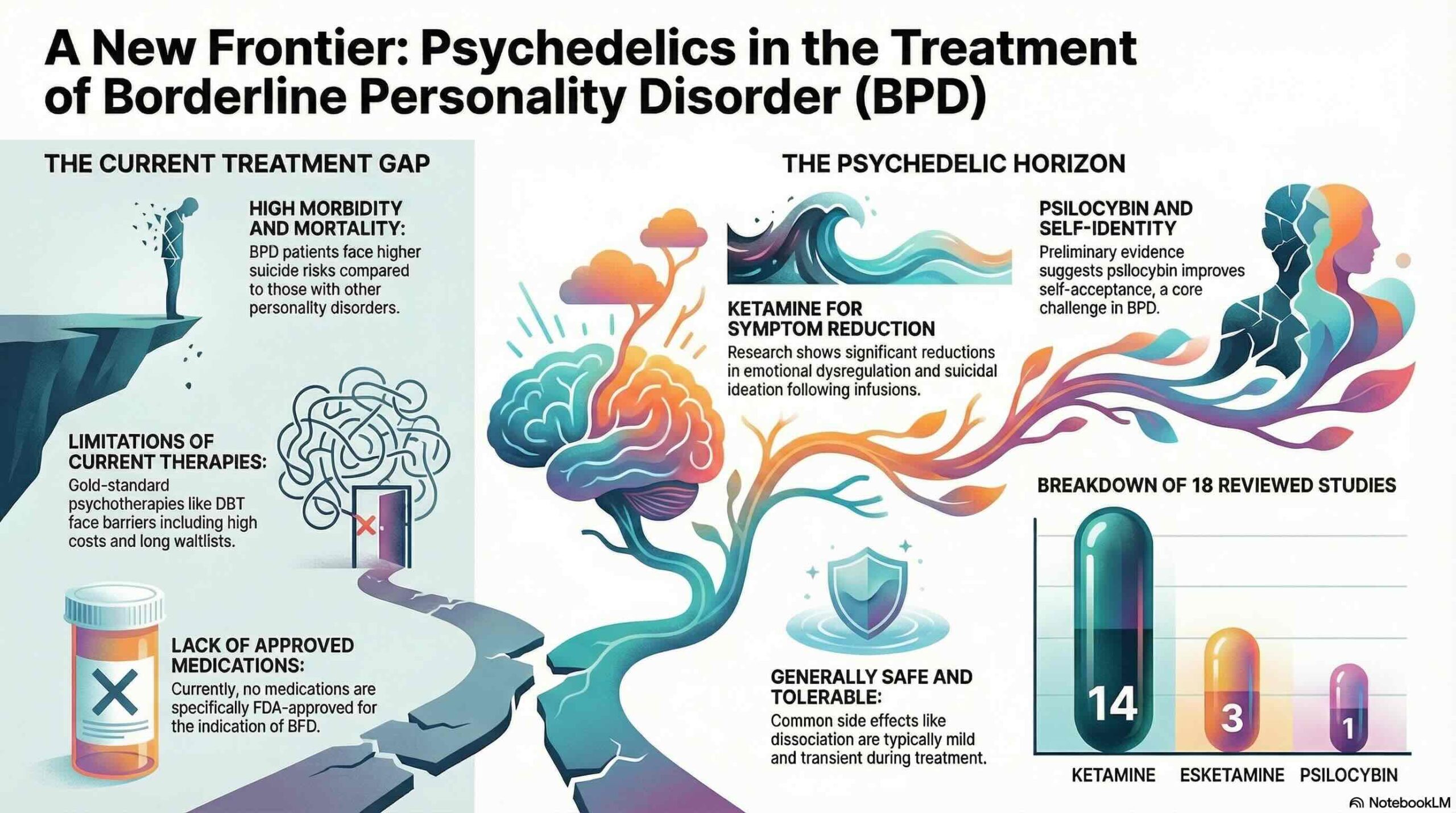
This narrative review was conducted to evaluate the current evidence for the safety and effectiveness of psychedelics, including ketamine, esketamine, and psilocybin, within the BPD population. BPD is fundamentally characterized by affective instability and interpersonal hypersensitivity. Although psychotherapy remains the gold standard for care, access to specialized programs like Dialectical Behavior Therapy (DBT) is often limited by high costs and long waitlists. Consequently, many patients rely on off-label pharmacological options that frequently lack robust efficacy for core BPD symptoms. Historically, BPD patients were excluded from psychedelic research due to concerns regarding potential safety risks, such as increased suicidality or substance misuse.
Infographic
Audio Summary
Key Findings
The researchers analyzed 22 studies and found preliminary evidence that ketamine and esketamine may reduce core BPD symptoms. Improvements were noted in emotional regulation and impulsivity, alongside enhanced socio-occupational functioning. Notably, intravenous ketamine demonstrated particular effectiveness for rapid symptom reduction compared to other administration routes. Biologically, these agents act via NMDA receptor antagonism to facilitate neuroplasticity and synaptogenesis. This mechanism may effectively prime the brain for psychotherapeutic interventions like DBT by addressing underlying neuroinflammation and stress-response dysregulation.
Evidence for psilocybin remains significantly more limited, with only one study identified that included BPD patients. While participants showed some mood improvements, the researchers reported serious adverse events including a brief psychotic episode and a suicide attempt. These findings underscore the necessity of rigorous clinical oversight. Across the reviewed literature, common side effects included dissociation, nausea, headache, and transient increases in blood pressure. While many participants tolerated treatment well, some withdrew due to worsened suicidality, impulsivity, or feelings of hopelessness.
Conclusion
While psychedelics show promise as a safe and feasible treatment option for certain individuals, the current evidence base is preliminary and constrained by small sample sizes and unblinded designs. The study calls for more high-quality randomized controlled trials that utilize BPD-specific outcome measures. Furthermore, because BPD symptoms often remit more slowly than major depression, future research must incorporate longitudinal data to track long-term safety and efficacy. These steps are essential to determine whether these interventions should eventually inform clinical practice for this vulnerable population.