


Introduction
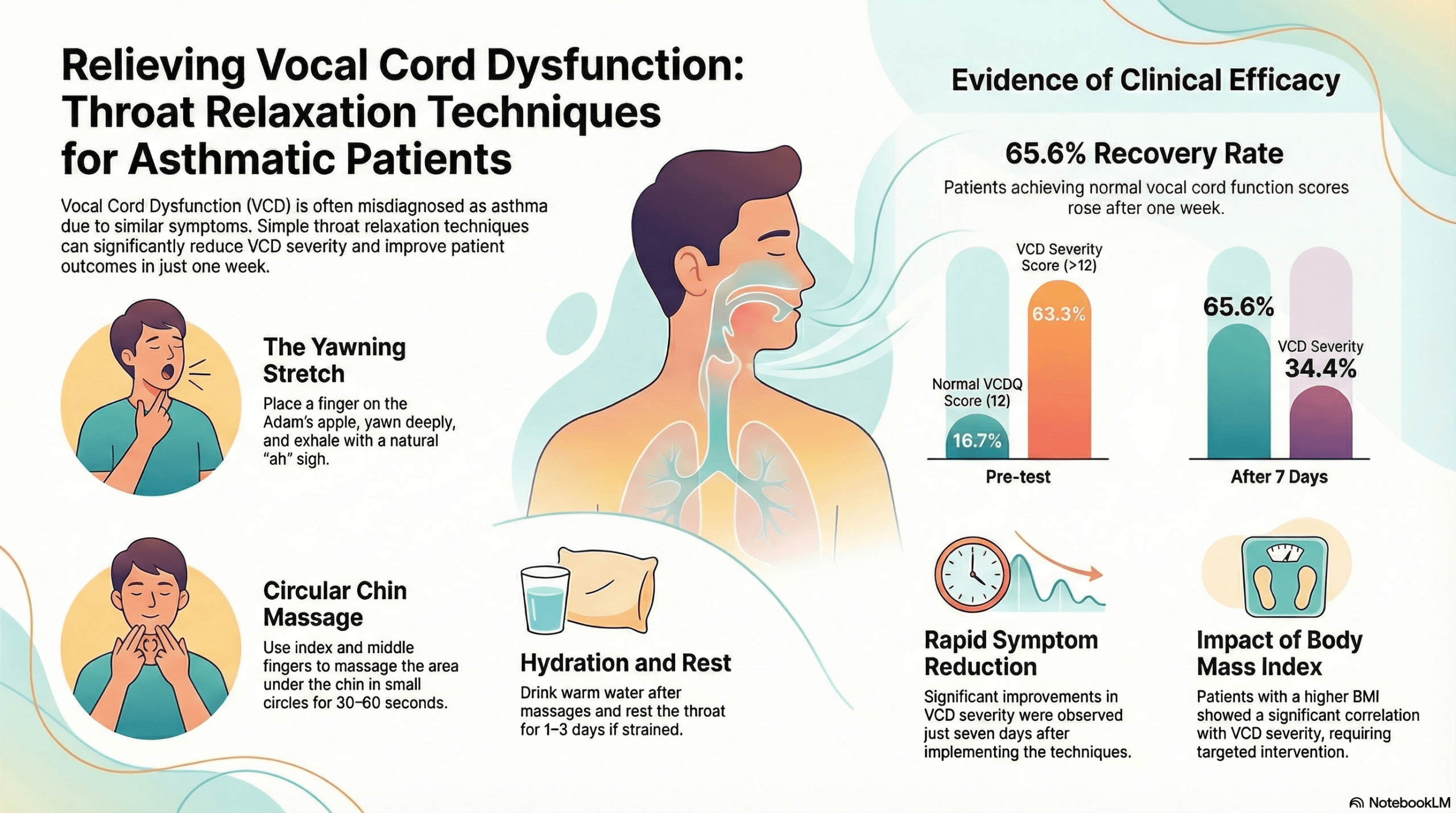
The 90 patient quasi experimental study, which featured a population where 80 percent of participants were over the age of 50, evaluated the effectiveness of three primary techniques. Patients were taught a yawning stretch where they exhaled while making a sigh “ah” sound at a natural vocal range to release the yawn completely. They also practiced a chin massage, using the index and middle fingers to move in small circles under the jawline for 30 to 60 seconds. Finally, a neck and throat massage was used to pinpoint tension areas and maintain relaxation in the muscles that otherwise close inappropriately during breathing.
Infographic
Audio Summary
Key Findings
The efficacy of these techniques was measured using the Vocal Cord Dysfunction Questionnaire. Before the intervention, only 16.7 percent of patients had scores within the normal range. After just seven days of practicing these exercises, this figure rose significantly to 65.6 percent. This rapid improvement underscores the potential for behavioral interventions to stabilize the upper airway and restore more controlled airflow during both inhalation and exhalation.
Analytical data further demonstrated that the relationship between symptom severity and factors such as body mass index and the length of a hospital stay became statistically significant after the 7 day implementation period. Both variables showed a p-value of 0.020, suggesting that these physical characteristics play a role in how patients respond to laryngeal retraining. Because these methods are simple, effortless, and efficient, they represent a high impact tool for nurses to prioritize at the bedside.
Conclusion
The study illustrates that implementing simple throat relaxation techniques leads to a measurable and rapid decrease in the severity of vocal cord dysfunction. These inexpensive and accessible methods provide a practical path to improving the quality of life for patients who might otherwise suffer from the effects of misdiagnosed or refractory asthma. By integrating these techniques into standard care, the medical community can offer more precise and effective relief for functional airway obstructions.