

Introduction
The study seeks to delineate the specific factors influencing attack patterns and the objective quality of sleep in patients suffering from cluster headache (CH). Central to the inquiry is the question of how an individual’s chronotype and underlying circadian dysfunction drive the clinical manifestations of the disorder. By focusing exclusively on an Italian cohort, the researchers strategically minimized external noise from varying latitudes and cultural routines. This approach allowed for the observation of specific local habits, such as the pomeridiano (afternoon nap), to help differentiate between cultural triggers and true internal biological mechanisms. The examination begins by exploring how these internal clocks or chronotypes correlate with the specific characteristics of the disease.
Infographic
Audio Summary
Key Findings
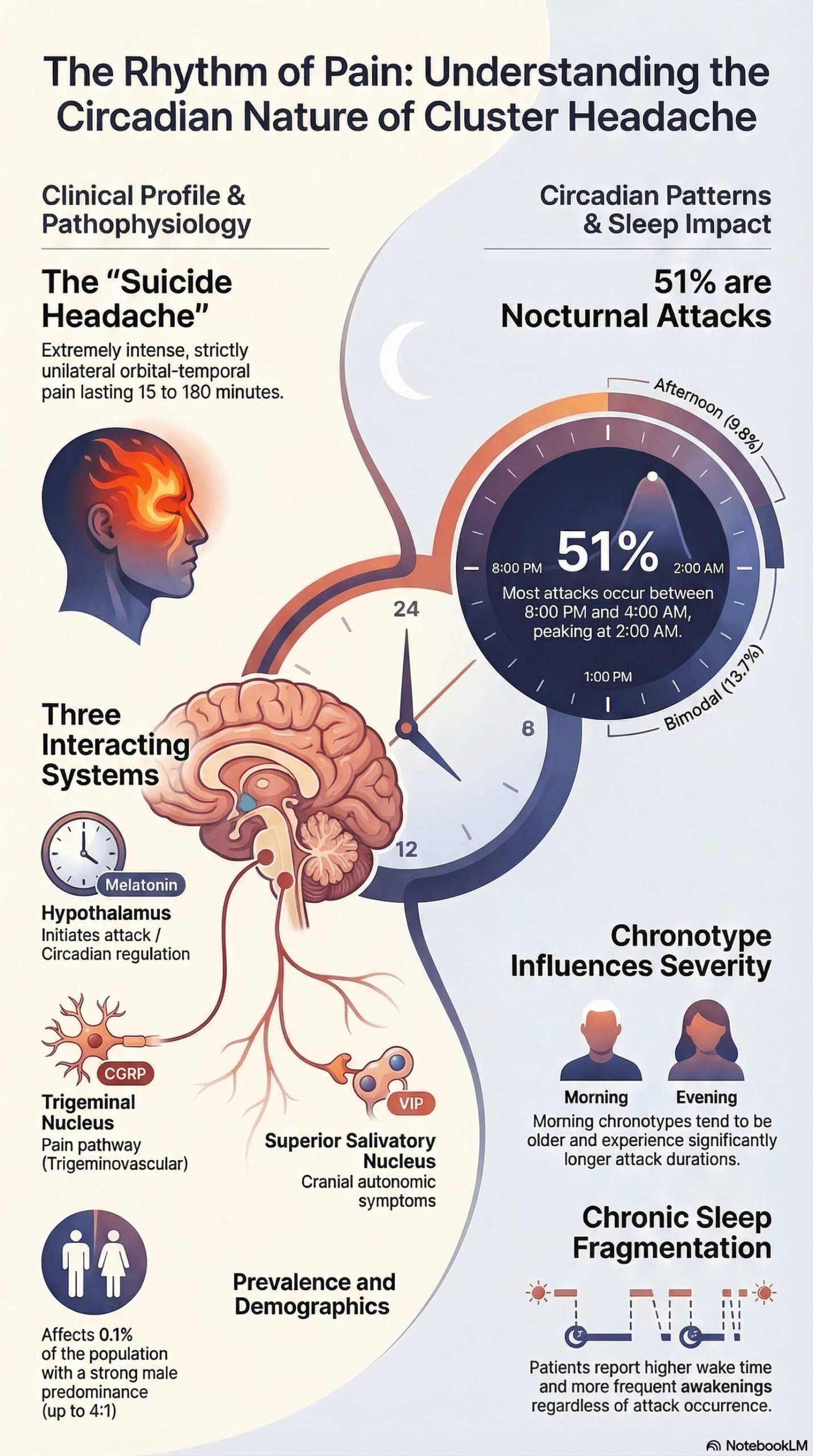
The research identifies distinct correlations between chronotypes and disease presentation within the studied population. Data suggests that age significantly influences chronotype, with Morningness more clearly tethered to advanced age within this specific cohort. While the evening chronotype group did not show a statistically significant age difference compared to the intermediate group, Eveningness was significantly linked to shorter attack durations. Furthermore, the study analyzed the significance of a bimodal attack pattern, where patients suffer from both diurnal and nocturnal episodes. This pattern appears to serve as a marker for a more severe clinical profile, as these patients reported a higher frequency of previous therapeutic failures and required combination therapy to manage their active cluster bouts.
A critical component of the research involved contrasting subjective sleep diaries with objective actigraphic recordings. According to the diary analyses, CH patients are fundamentally poorer sleepers who experience significantly increased wake time after sleep onset (WASO). These findings align with previous actigraphic literature cited in the study, which notes reduced sleep efficiency and prolonged sleep latency in this population. Crucially, the research suggests that sleep impairment is a primary circadian symptom rather than a secondary reaction to pain. This is evidenced by the finding that sleep architecture is affected equally by both diurnal and nocturnal attacks, pointing to an underlying rhythm dysfunction that persists regardless of when the pain occurs.
Conclusion
These findings underscore the profound connection between the hypothalamic biological clock and the clinical burden of cluster headache. Within the scope of this Italian cohort, the evidence suggests that the disease is as much a rhythm disorder as it is a pain disorder. Consequently, there is a strong argument for the strategic importance of restoring sleep quality as a primary therapeutic goal in CH management. Clinicians should view the stabilization of circadian health as a central component of comprehensive care for those living with the condition.