


Introduction
The survey was conducted to identify patient prioritized research needs and evaluate interest in clinical trial participation for a condition widely regarded as one of the most excruciating forms of pain known to humans. Strategic alignment between research objectives and patient perspectives is vital to overcoming long standing challenges in trial recruitment and effective resource allocation. By centering the lived experience of those affected, researchers can move beyond traditional trial designs to incorporate outcomes that matter most to patients, such as overall well being and attack duration. This report establishes the critical foundation for transitioning from standardized protocols to more targeted, patient centered interventions.
Infographic
Audio Summary
Key Findings
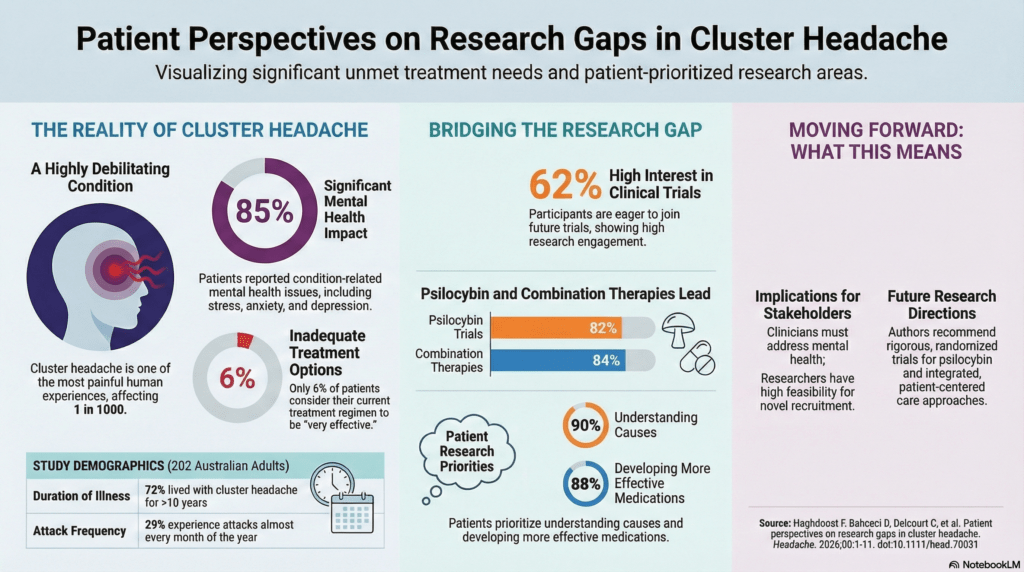
The current clinical environment remains a frustrating cycle of trial and error that imposes severe economic and psychological burdens. Although 85.6 percent of participants utilize prescription acute medications, a profound treatment gap exists. Only 6 percent find their current regimen very effective, while a combined 35 percent report that their treatments are either somewhat ineffective or not at all effective. This widespread lack of efficacy suggests a significant waste of clinical resources and contributes to a staggering mental health burden. Approximately 85 percent of participants reported conditions such as stress, anxiety, or depression directly linked to their headaches. These psychological comorbidities are a direct consequence of persistent therapeutic failure, highlighting the urgent need for more reliable care pathways.
Despite the failures of the current standard of care, there is a high appetite for scientific exploration, with 62 percent of participants expressing interest in future clinical trials. This interest is heavily weighted toward novel interventions: 82 percent of respondents were interested or very interested in psilocybin research, and 84 percent favored combination therapies. This preference signals a clear paradigm shift in patient expectations. While oxygen therapy is clinically recognized as highly effective, it remains underutilized or inaccessible to many, with only 54 percent usage reported in this study. The intense interest in psilocybin and combination approaches is a reaction to the accessibility barriers and the perceived futility of traditional triptan based strategies.
This level of engagement represents a form of patient agency, where sufferers are actively seeking evidence based solutions to resolve the physical and psychological stalemate caused by current management gaps. For trial designers, this data serves as a vital signal to align future research with these strong patient preferences to improve recruitment and therapeutic relevance.
Conclusion
The results confirm a clear mandate from the patient community for research into underlying causes and innovative therapies like psilocybin. The willingness of participants to engage in clinical trials, including those involving placebo arms, demonstrates a high level of altruism and clinical desperation within the Australian community. This engagement proves that the patient population is a ready and motivated partner for immediate clinical intervention. The data underscores an urgent unmet need for evidence based care and highlights a significant opportunity for researchers to design trials that are both patient centered and scientifically robust.