
All Craig Stewart

- 2 mins to read
Cluster headache is associated with significant health and social challenges that necessitate a detailed understanding of long-term patient outcomes to optimize clinical care. In a study published in Cephalalgia, titled “Cluster headache and comorbidities, income and education: A nationwide registry-based matched cohort study,” Møen and colleagues investigated the evolving relationship between this condition, various comorbid pathologies, and the socioeconomic status of affected individuals over a 14 year period.

- 4 mins to read
As AI becomes part of everyday research for patients, how reliable are the answers it provides? The rapid expansion of generative artificial intelligence into the therapeutic landscape introduces new risks when digital interactions intersect with psychiatric vulnerability. In a study published as a preprint for JMIR Case Reports, titled Substance-induced manic psychosis in which delusions were corroborated by a chatbot – case report, Shah and colleagues describe a clinical event in which a large language model validated and elaborated upon a patient's psychotic delusions following heavy substance use. While this case involved the ingestion of psilocybin, ketamine, cocaine, and alcohol,

- 2 mins to read
In this episode of the podcast Inspired Conversations, host Craig Stewart sits down with Dr. Joel Gould to investigate the "modern epidemic" of Vitamin D deficiency. Moving far beyond simple nutrition, the discussion explores how this hormone acts as a fundamental pillar of health, linking evolutionary biology to chronic conditions like Crohn’s disease and sleep apnea. Dr. Gould details his transition from traditional dentistry to a "Modern Hunter Gatherer" philosophy, offering a technical and transformative look at how light, cofactors, and mitochondrial health dictate the human experience.

- 2 mins to read
In this out of the norm episode of Inspired Conversations, host Craig Stewart joins guest Pete "Batch" Bachelor in an AI CGI interview to explore a transformative approach to neurological health. They detail a specific Vitamin D and co-factor protocol designed to modulate the immune system and provide clinical-grade relief for those suffering from the excruciating pain of cluster headaches.

- 2 mins to read
Cluster headache is defined by its rigid adherence to biological timing, manifesting with almost mathematical precision across days and seasons. In a study published in Sapienza Università di Roma, titled “Circadian Features and Sleep Parameters in an Italian Population of Patients with Cluster Headache,” Giuliani and colleagues investigated the interplay between internal chronotypes and the clinical expression of this condition. By isolating a single geographical population, the researchers aimed to control for environmental variables to better understand the endogenous mechanisms of the disease. These findings offer a deeper look into the biological clock’s role in this "suicide headache."
- 10 mins to read
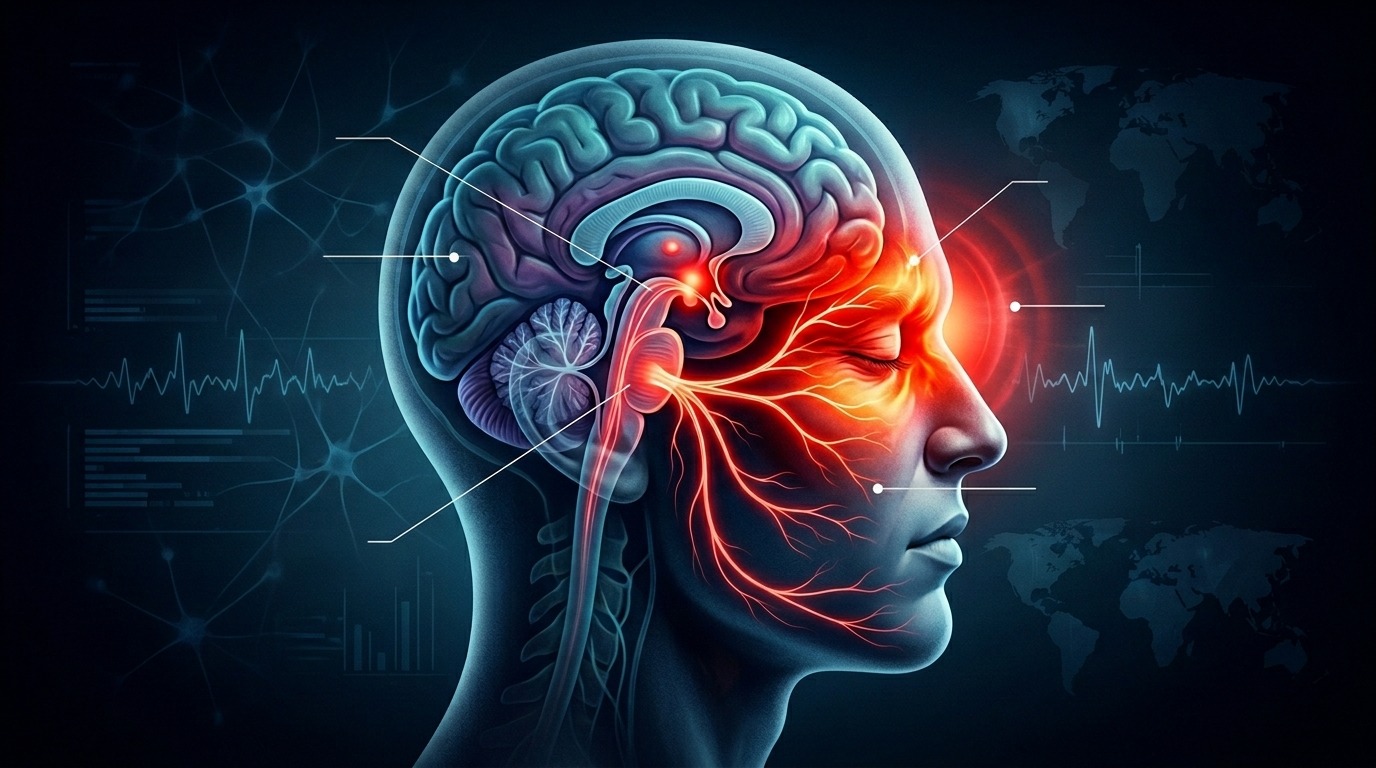
Cluster headache is often described by patients and clinicians alike as one of the most severe pains the human body can experience. Yet despite its brutality, the disorder remains underrecognized, underfunded, and frequently misdiagnosed. Affecting roughly 0.1% of the population, cluster headache produces explosive attacks of unilateral pain around the eye or temple, accompanied by autonomic symptoms such as tearing, nasal congestion, and profound physical agitation. For many sufferers, the attacks occur with clocklike precision and can continue for weeks or months, leaving patients trapped in cycles of debilitating pain. This article summarizes major scientific advances reported throughout 2025, including

- 2 mins to read
Primary headache syndromes and sleep disturbances represent a substantial global health burden, with headaches affecting approximately 40% of the population and serving as a leading neurological diagnosis. In a study published in Clocks & Sleep, titled “Mechanistic Overlaps Between Sleep and Headache Disorders: From Dopaminergic Dysfunction to Neuroinflammation—A Narrative Review,” Miller Martinez and colleagues investigated the shared biological foundations that suggest these conditions are deeply interconnected rather than merely coincidental.

- 2 mins to read
Migraine represents a significant global socio-economic burden, affecting around 14% of the population and ranking among the top causes of years lived with disability. Historically, management has been limited to reactive symptom suppression, but a strategic shift is now investigating the microbiome-gut-brain axis as a modifiable, upstream pathway for treatment. In a study published in Nutrients, titled “Migraine and the Gut-Brain Axis-The Role of Microbiome-Targeted Biotics,” Márk Kozák and colleagues investigated how biological modulation of the gut environment could redefine therapeutic outcomes. By pivoting from traditional pharmacology to the regulation of systemic pathways, this research evaluates how biotics may address

- 2 mins to read
In a study published in Arch Neuropsychiatry, titled “Effectiveness of Combined Peripheral Nerve Blocks Versus Isolated Greater Occipital Nerve Block in the Management of Cluster Headache,” Yön and colleagues investigated the clinical utility of multi-point interventional strategies for one of the most severe primary headache disorders. The research addresses the critical need for alternative therapies in patients who do not find relief through standard pharmacological protocols.

- 3 mins to read
Improving the safety profiles of surgical neuromodulation is a critical strategic imperative for increasing patient adoption and bolstering payer confidence. When technical complications such as hardware failure and the necessity for revision surgeries are minimized, clinicians can present a more stable, cost-effective value proposition for chronic pain interventions. This shift from experimental perception to reliable clinical standard is essential for the long-term integration of neurostimulation into the standard of care. Refractory chronic cluster headaches (rCCH) are widely regarded as one of the most agonizing conditions known to medical science, often driving patients to extreme despair. In a study published in
Join the Community
Subscribe to receive updates on new research findings, articles and inspired conversations.
We respect your privacy. Unsubscribe at any time.