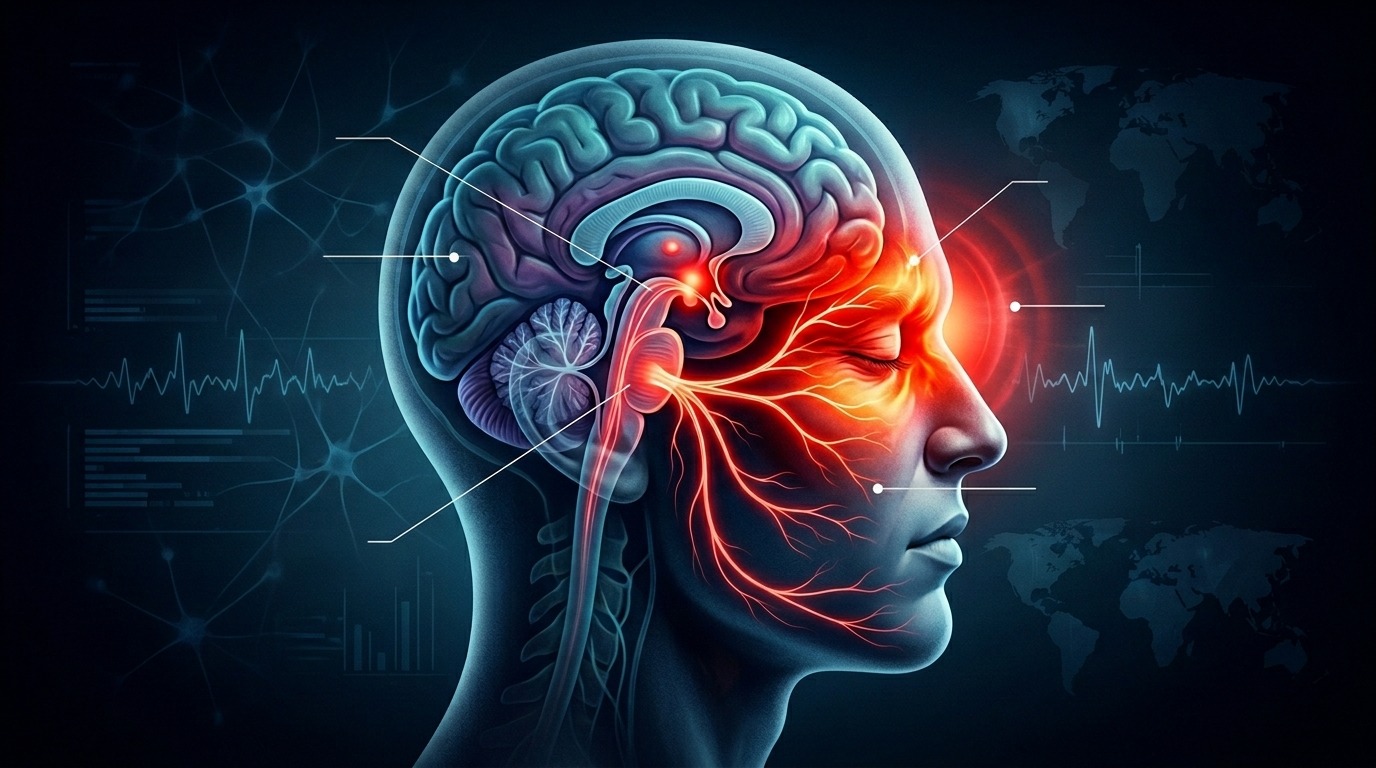
For the millions of people living with chronic migraines, the experience is rarely “just a headache.” It is a systemic storm, often preceded by a “prodrome” phase where the brain and body signal impending chaos through intense food cravings for chocolate or cheese, and followed by debilitating nausea that affects up to 95% of sufferers. Traditionally, we have treated the migraine as a purely neurological event – an electrical malfunction in the cranium. However, emerging clinical evidence suggests we have been looking at only half the map.
The biological reality is that the brain does not ache in a vacuum. Substantial evidence now links migraine to gastrointestinal (GI) conditions such as Irritable Bowel Syndrome (IBS) and colitis. This connection is mediated by the gut-brain axis, a sophisticated chemical highway where trillions of microbes influence everything from our immune response to how our nerves perceive pain. Could the secret to stopping a migraine actually live within your digestive tract?
The “Diversity Deficit”: A Microbiological Monoculture
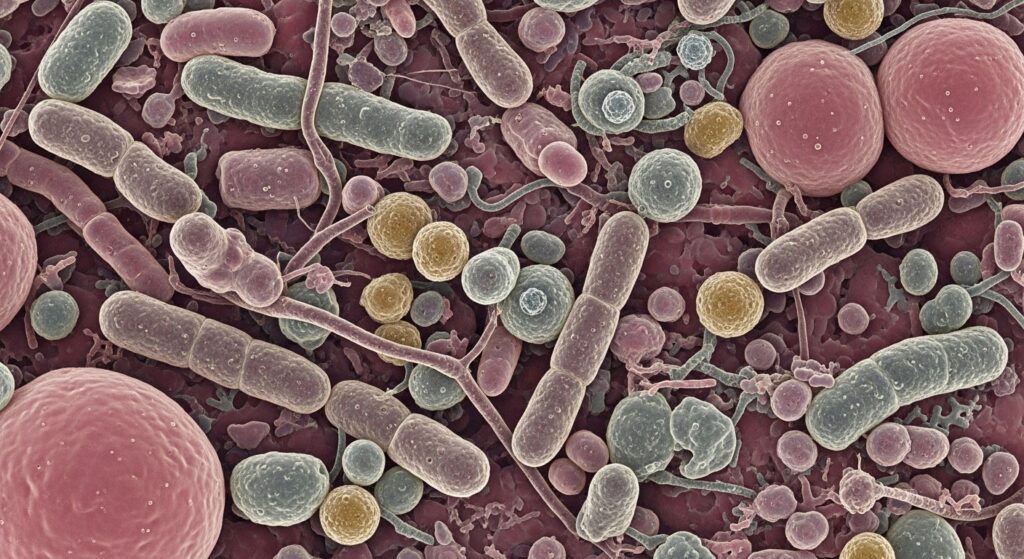
In the world of microbiology, a healthy gut is like a thriving rainforest – resilient because of its vast variety. Scientists measure this via Alpha Diversity (the total number of species) and Beta Diversity (the specific composition of those species). When we look at the migraine-prone brain through the lens of the gut, we find a “diversity deficit.”
Migraine patients typically exhibit a gut microbiome with reduced species number and relative abundance. This state of imbalance, or dysbiosis, transforms the gut from a protective barrier into a source of systemic irritation. In a diverse ecosystem, “guardian” bacteria keep the intestinal lining tight. In a struggling monoculture, the barrier weakens, allowing Lipopolysaccharides (LPS) – toxic bacterial byproducts – to leak into the bloodstream. This “leaky gut” triggers a cascade of pro-inflammatory cytokines, eventually leading to the release of CGRP (Calcitonin Gene-Related Peptide). Since CGRP is the very molecule targeted by modern “holy grail” migraine drugs, it is becoming clear that gut health directly influences the neuroinflammatory triggers of a headache.

The Case of the Missing Guardian: Faecalibacterium
Among the microbial residents of a healthy gut, Faecalibacterium serves as a vital sentinel. Research identifies a significant depletion of this genus in both children and adults who suffer from migraines. This loss is critical because Faecalibacterium is a primary producer of butyrate, a short-chain fatty acid that acts as a chemical “peacekeeper.”
Butyrate is essential for maintaining the intestinal wall and regulating the HPA (Hypothalamic-Pituitary-Adrenal) axis, which manages our stress response. When this guardian is missing, the biological “factory” for anti-inflammatory compounds shuts down.
“These microbes produce large amounts of butyrate, which is involved in improving intestinal barrier function and activating anti-inflammatory and antioxidant pathways,” the research notes.
Further, the absence of specific bacteria like Clostridium coccoides has been negatively correlated with MIDAS (Migraine Disability Assessment) scores. This suggests that the fewer of these “sentinel” bacteria you have, the more disabling your migraines are likely to be.
The “Acetate Paradox” and the Trigeminal Double Agent
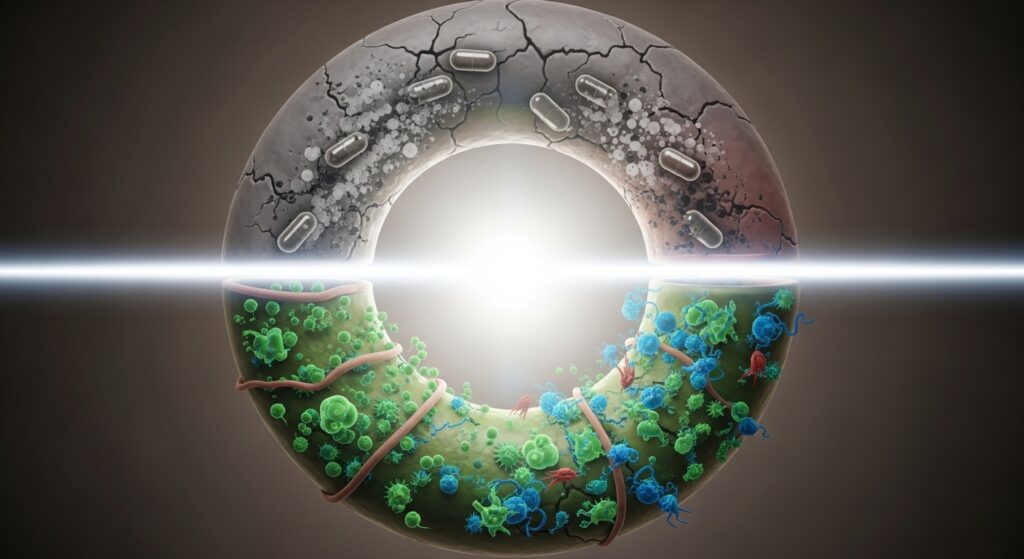
While “increasing good bacteria” is the standard advice, the microbiome is full of nuances. Consider the “Acetate Paradox.” While the genus Bifidobacterium is associated with a lower risk of migraine, Lactobacillus – often the star of the probiotic aisle – has been associated with an increased risk in certain studies.
The culprit is acetate, a metabolite produced by both genera. In the gut, acetate is generally beneficial and anti-inflammatory. However, the microbiome is a complex chemical factory and acetate can act as a “double agent.” Evidence from rodent models suggests that once acetate enters systemic circulation, it can actually enhance sensitivity in headache pathways via the trigeminal system, the primary sensory network for pain in the head. This highlights a fascinating challenge for personalized medicine: a metabolite can be a “health-booster” in the colon but a “pain-trigger” when it reaches the nerves.
The Age Gap: Why the Pediatric Microbiome Is Different
The microbial signature of a migraine evolves as we age. In children, the microbiome is in a state of flux – highly susceptible to diet, medication, and environment. For instance, the phyla Proteobacteria and Bacteroidetes are found in much higher abundance in pediatric migraine sufferers than in adults. While Bacteroidetes are usually considered “good” in adults, their high relative abundance in an immature, less-diverse pediatric gut suggests they may play a different role in early-life neuroinflammation.

Across all ages, however, we see an increase in genera like Veillonella, Coprobacillus, and Sutterella. These bacteria are directly involved in tryptophan metabolism. This is significant because tryptophan is the essential precursor for serotonin synthesis. Given that serotonin levels are known to fluctuate wildly during a migraine attack, dropping between headaches and spiking during the pain phase, the gut’s role in manufacturing the chemicals that regulate our brain’s pain thresholds cannot be ignored.
Probiotics vs. Painkillers: Breaking the Vicious Cycle
The most actionable finding in recent systematic reviews is the shift toward gut-targeted therapies. Clinical trials involving synbiotics (a blend of prebiotics and probiotics) have demonstrated significant reductions in migraine frequency, duration, and severity.
Perhaps most importantly, these therapies led to a marked reduction in painkiller consumption. This offers a way to break a destructive “vicious cycle.” Many migraine patients rely on NSAIDs (like ibuprofen) for relief, yet long-term NSAID use is known to cause intestinal injury and further dysbiosis. This gut damage, in turn, can trigger more migraines. By using probiotics to manage the underlying systemic inflammation, patients can reduce their reliance on analgesics that may be fueling their next attack. While these gut-targeted treatments do not yet replace acute “rescue” medications like triptans, which can actually aggravate nausea in some patients – they provide a powerful preventative tool.
The Future of Personalized Migraine Care
We are witnessing a changing paradigm. We are moving away from treating migraines as purely “head-based” problems and toward seeing them as a systemic gut-brain issue. The gut acts as a chemical factory for the brain, and in the migraine-prone, that factory is often missing its most vital supervisors.
While we still need more long-term trials to find the “perfect” microbial formula, the link is undeniable. Your gut bacteria influence your inflammation, your serotonin levels, and your very threshold for pain. As you look at your own journey toward relief, it is worth asking: could your digestive health be the missing link in your search for a pain-free life?