Long before medicine had the right language for it, the pain was already there. The same orbit. The same circuit that fires and refuses to stop. What we now call cluster headache has been documented since at least 1641. It took another three centuries of misclassification and missed diagnoses before medicine understood what it was actually looking at.
From a Dutch anatomist's puzzled case notes to a formal international diagnostic code, this is how the medical world arrived at cluster headache.
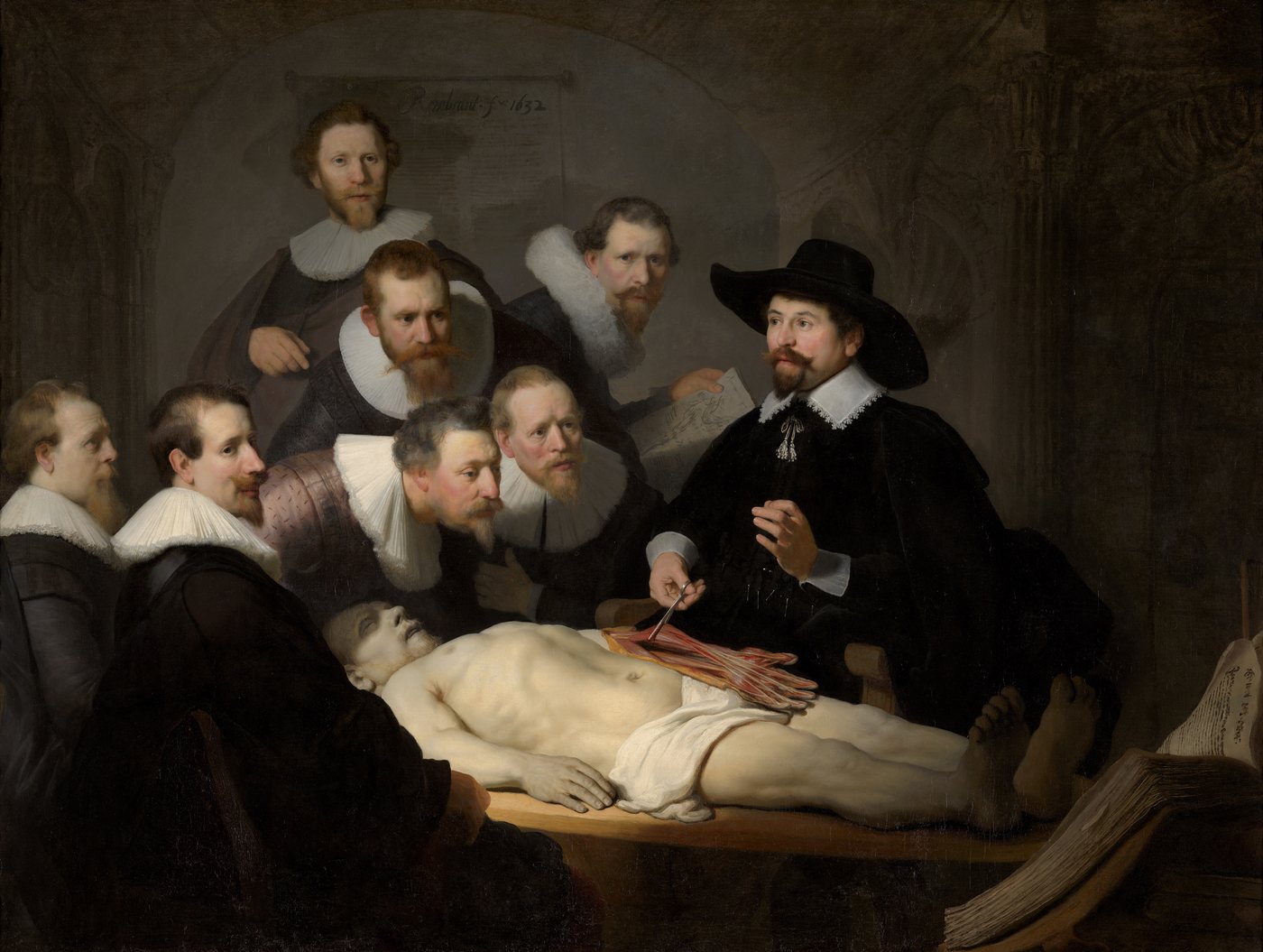
Dutch anatomist Nicolaes Tulp documented what may be the earliest surviving description of cluster headache. He had no name for it, no framework, no mechanism to offer. He simply noted the pain, recurring, unilateral, severe. A clinical observation without a clinical category to put it in.

Wilfred Harris called it migrainous neuralgia. The word neuralgia acknowledged the severity of the nerve pain, which was accurate. But the migraine framing would cast a long shadow over cluster headache patients for decades, shaping how doctors saw them and how they didn't.
Bayard Horton at the Mayo Clinic described the condition with genuine clinical rigour, documenting the episodic pattern and the autonomic features. He called it histaminic cephalalgia, believing histamine was the primary driver. The mechanism was wrong. But Horton insisted this was a real and distinct syndrome, and that insistence mattered more than he knew.
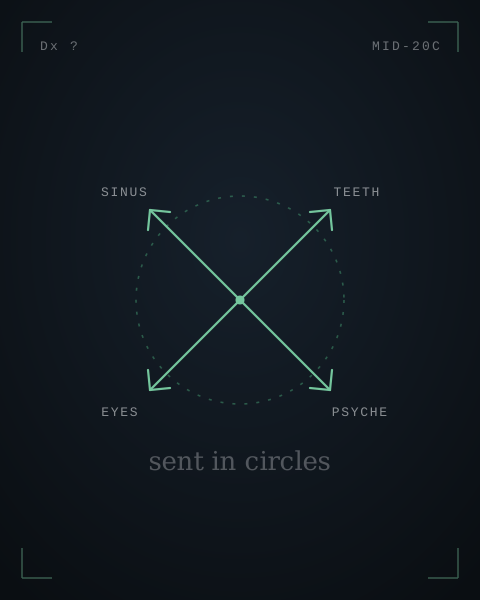
For a generation, cluster headache patients were sent in circles. Neurologists blamed the sinuses. ENT surgeons found nothing. Dentists pulled healthy teeth. Psychiatrists found anxiety. Eye specialists documented autonomic signs and missed the cause. The pain continued while medicine argued about its address.
The attacks clustered. They returned and remitted on a schedule that felt almost biological. The circadian rhythm of the pain, its strict unilaterality, its autonomic features, its extraordinary severity, all began to define it as something distinct. Kunkle and colleagues coined the term cluster headache in 1952. A shape was finally forming.
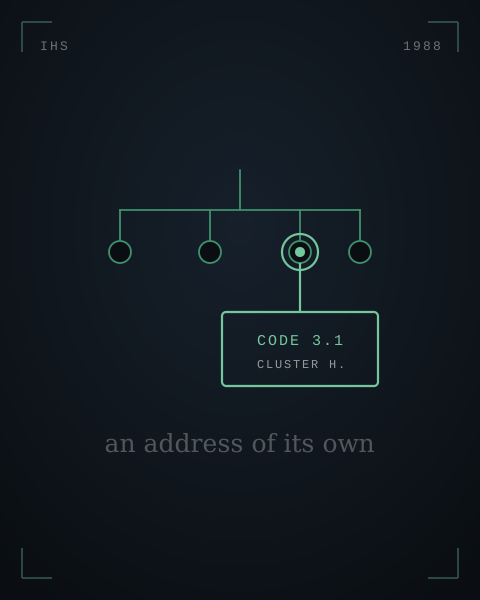
The International Headache Society published the first formal headache classification system. Cluster headache received its own diagnostic code and criteria. After nearly 350 years, it had an official address in the medical taxonomy. Not a migraine variant. Not a neuralgia. Its own thing.
A new framework emerged: the trigeminal autonomic cephalalgias. Cluster headache was placed within this group alongside paroxysmal hemicrania, hemicrania continua and the short-lasting neuralgiform attacks known as SUNCT and SUNA. The trigeminal nerve and the parasympathetic pathways were identified as central to the mechanism. For the first time, the anatomy of the condition was becoming legible.
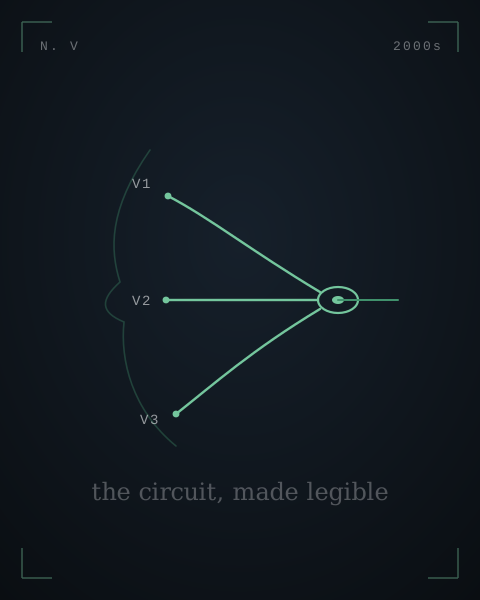
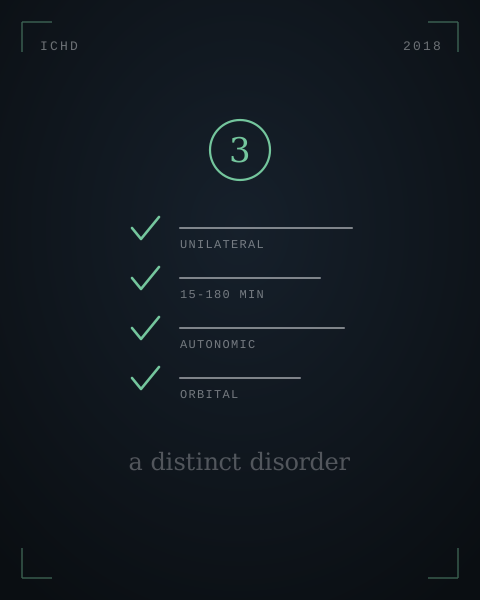
The third edition of the International Classification of Headache Disorders codified the modern diagnostic criteria. Episodic or chronic. Unilateral. Strictly orbital, supraorbital or temporal. Duration 15 to 180 minutes. At least one ipsilateral autonomic feature, or the restless agitation that sets it apart from migraine, where sufferers lie still rather than pace. A distinct primary headache disorder. Not migraine. Not sinus. Not psychological.
Every name revealed something about how medicine was thinking at the time. Every name also missed something. Open each file to see what it got right and what it got wrong.
Sluder, an ear-nose-and-throat surgeon, traced the pain to the sphenopalatine ganglion, a parasympathetic relay we now know sits at the heart of the trigeminal-autonomic reflex. His transnasal injections to numb that ganglion were the direct ancestor of the sphenopalatine ganglion blocks still used to treat cluster headache today.
He framed it as a local disorder of a single nerve ganglion in the nose, to be fixed by injection. That narrow, nasal framing missed the central mechanism entirely and helped send generations of patients down a fruitless sinus-and-surgery path.
The Swiss neurologist Bing gave one of the first detailed neurological accounts in his textbook Lehrbuch der Nervenkrankheiten, coining erythroprosopalgia, literally “red face pain”. The name fixed onto two things observers kept seeing: the flushing and the strictly one-sided facial pain.
“Red face pain” names the surface, the visible flush and tearing, and mistakes it for the essence. Like Horton’s histamine a generation later, it elevated a downstream autonomic sign into the supposed identity of the disease.

Harris recognised this as a neurological condition with genuine nerve involvement. Calling it neuralgia acknowledged the severity. A serious clinician was taking this seriously, and putting it in the record. That mattered.
The migraine framing embedded a false kinship that proved almost impossible to shake. It suggested shared mechanisms and similar treatments. Neither applied. Patients were managed as migraine sufferers for decades as a result.

Horton documented the episodic clustering, the autonomic features and the extraordinary severity with clinical precision. He insisted this was a real and distinct syndrome, not anxiety or exaggeration. That insistence gave it institutional credibility.
Histamine is not the primary driver. Years of histamine desensitisation therapy followed this name, and ultimately failed. Naming a condition after the wrong mechanism bakes the error into the vocabulary.

Eponyms carry weight. Attaching a respected physician's name to a condition gives it authority and a presence in reference texts. It signalled that someone had taken this seriously enough to stake their name on it.
A doctor's name tells you nothing about mechanism, anatomy or cause. It provides no diagnostic pathway, no clinical guidance and no route to understanding. It was a placeholder dressed as knowledge.
The ocular symptoms of cluster headache, the tearing, ptosis, conjunctival injection and miosis, are real, prominent and diagnostically significant. This name at least acknowledged that the eye was involved, which is clinically true.
Cluster headache is not a disease of the eye. This framing sent patients to ophthalmologists who found nothing structurally wrong, adding another layer of disbelief to a condition that was already routinely dismissed.
Finally, a name that described what actually happens. The cyclical clustering of attacks, the episodic nature, the distinct remission and return. Phenomenologically accurate, and neutral enough to survive as shared clinical vocabulary.
The word cluster describes a temporal pattern. It says nothing about cause, anatomy or the severity that has led researchers to call this the most painful condition known to medicine. Many of us who live with it feel the name significantly undersells it.
A category rather than a condition name, but a meaningful one. TAC identifies the trigeminal nerve and the autonomic nervous system as the key anatomical players, which is mechanistically accurate. It gave cluster headache a defined neurological family for the first time.
Cluster headache remains clinically distinct from the other TACs. Grouping them together can blur differences that matter in treatment, in research weighting and in how patients experience and describe what happens to them.
This name came from patients, not physicians. It says what no clinical term will: the pain ranks among the most severe known to medicine, and the despair it drives is real and documented, with suicidal thoughts markedly raised among those enduring untreated attacks. It refuses to let the condition be minimised.
It names desperation rather than disease, and tells you nothing of mechanism or anatomy. Used carelessly it can frighten and stigmatise, defining people by their darkest moments instead of by a real, treatable neurological disorder, one that proper acute treatment and prevention can bring under control.
Before the right diagnosis existed, patients were given wrong ones. These are the conditions that cluster headache was routinely mistaken for.
Medicine slowly learned that cluster headache was not a migraine variant. Not sinus pain. Not referred dental pain. Not a stress response. Not a psychiatric complaint.
It was a distinct primary headache disorder, with its own anatomy, its own circadian biology and its own neurological fingerprint. But it took most of the 20th century to arrive at that conclusion, and real people lived inside that gap.
"The history of cluster headache is not just a history of pain. It is a history of medicine slowly learning to listen."
For those of us who live inside this condition, that history is not abstract. Every decade of misunderstanding represents real people who were told the wrong thing, given the wrong treatment and sent home with the wrong name for what was happening to them.
Craig Edward Stewart · 2026
Discussion
Thoughts on this article? A different read on the research? I'm interested in the conversation.